
Business Software
Inventory Management Software: The Complete Guide for Indian Businesses (2026)
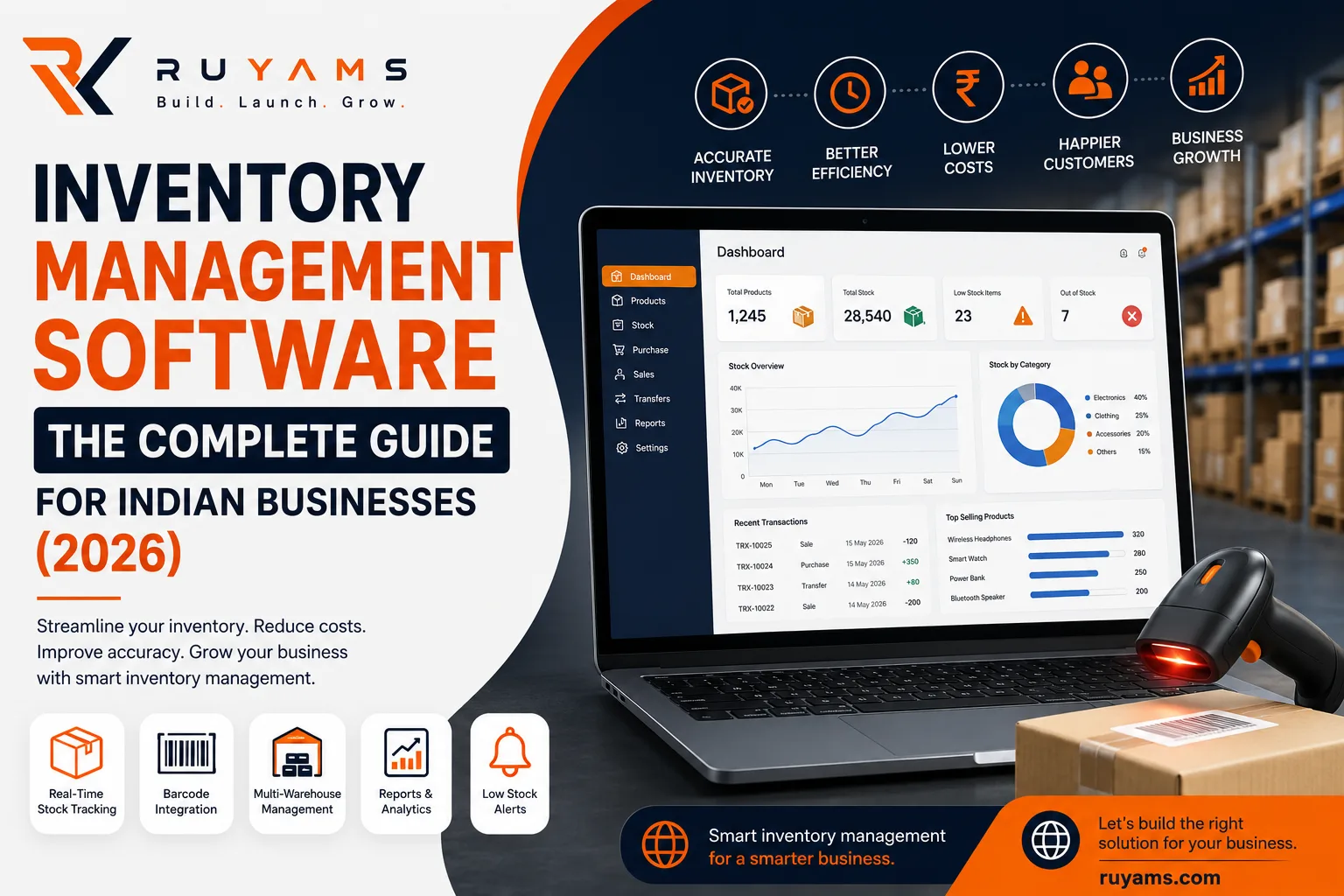
No matter what industry you're in—retail, wholesale, manufacturing, distribution, or e-commerce—inventory is one of your most valuable business assets.
Yet many businesses still rely on Excel spreadsheets, handwritten stock registers, or outdated systems to manage inventory.
These methods often lead to:
- Missing stock
- Overstocking
- Incorrect purchase planning
- Delayed deliveries
- Lost sales
- Human errors
As businesses grow, manual inventory management becomes increasingly difficult.
This is where inventory management software becomes essential.
In this guide, we'll explain everything Indian businesses need to know about inventory management software, including its benefits, essential features, implementation process, and how to choose the right solution in 2026.
What is Inventory Management Software?
Inventory management software is a digital system that helps businesses track, organize, and control inventory throughout its lifecycle.
Instead of manually updating stock records, the software automatically records inventory movements, making it easier to monitor stock levels in real time.
It typically manages:
- Raw materials
- Finished goods
- Warehouse inventory
- Product movement
- Purchase orders
- Sales
- Returns
- Stock transfers
The goal is simple: keep the right products available at the right time while reducing unnecessary inventory costs.
Why Businesses Need Inventory Management Software
Many growing businesses don't realize how much money poor inventory management can cost.
Stockouts. Running out of products results in lost customers and lost revenue.
Overstocking. Buying too much inventory ties up working capital and increases storage costs.
Manual errors. Human mistakes during stock entry can lead to inaccurate inventory records.
Slow operations. Searching for inventory manually wastes valuable employee time.
Poor visibility. Without real-time data, managers struggle to make informed purchasing decisions.
Inventory software addresses these challenges by providing accurate, up-to-date information across your entire inventory process.
Key Features of Inventory Management Software
A modern inventory management system should include:
Real-time stock tracking
Monitor inventory levels across warehouses and locations instantly.
Barcode & QR code support
Scan products quickly for faster receiving, transfers, and sales.
Purchase management
Track suppliers, purchase orders, and incoming inventory.
Sales management
Automatically reduce inventory after each sale.
Multi-warehouse management
Manage stock across multiple branches or warehouses from a single dashboard.
Low stock alerts
Receive automatic notifications when inventory reaches predefined reorder levels.
Batch & expiry tracking
Especially useful for pharmaceuticals, food businesses, cosmetics, and chemical manufacturers.
Reports & analytics
Generate reports for stock valuation, fast-moving products, slow-moving inventory, profitability, and purchase history.
User roles & permissions
Control employee access based on responsibilities.
Cloud access
Access your inventory securely from anywhere using any device.
Which Businesses Need Inventory Software?
Inventory software isn't limited to large enterprises. It's valuable for businesses of all sizes, including:
- Retail stores
- Wholesalers
- Manufacturers
- Distributors
- E-commerce businesses
- Pharmacies
- Hardware stores
- Electronics retailers
- Furniture businesses
- Textile companies
- Automobile spare parts dealers
If your business manages physical products, inventory software can significantly improve efficiency.
Benefits of Inventory Management Software
Better inventory accuracy. Reduce manual errors and maintain reliable stock records.
Faster operations. Automate repetitive tasks and speed up inventory processes.
Improved customer satisfaction. Accurate stock information helps fulfill customer orders on time.
Lower operating costs. Reduce unnecessary inventory purchases and storage expenses.
Better business decisions. Access real-time reports and analytics for smarter purchasing and planning.
Increased productivity. Employees spend less time updating spreadsheets and more time serving customers.
Inventory Management Software vs Excel
Many businesses begin with Excel. While spreadsheets work for very small inventories, they quickly become difficult to manage as operations grow.
| Excel | Inventory Software | |---|---| | Manual updates | Automatic updates | | Error-prone | High accuracy | | No real-time tracking | Live inventory | | Limited reporting | Advanced analytics | | Difficult collaboration | Multi-user access | | No barcode support | Barcode integration |
Excel is a useful starting point, but dedicated software becomes essential as inventory volume increases.
Cloud-Based vs On-Premise Inventory Software
Cloud-based
Advantages: accessible from anywhere, automatic backups, lower upfront cost, easy updates, and scalability. Ideal for most small and medium-sized businesses.
On-premise
Advantages: complete control over data, internal hosting, and suitability for specific compliance requirements. Often preferred by larger organizations with dedicated IT infrastructure.
How to Choose the Right Inventory Management Software
Before investing, ask these questions:
- Can it grow with my business?
- Does it support barcode scanning?
- Can it integrate with accounting software?
- Is it mobile-friendly?
- Does it provide real-time reporting?
- Does it support multiple warehouses?
- Is customer support reliable?
Choosing software that fits your future growth is just as important as meeting your current needs.
Common Mistakes Businesses Make
Avoid these common pitfalls:
- Choosing software based only on price
- Ignoring employee training
- Not planning data migration
- Purchasing unnecessary features
- Failing to back up data
- Skipping implementation testing
A successful implementation depends on both the software and the processes surrounding it.
Future Trends in Inventory Management (2026)
Inventory management continues to evolve with technology. Emerging trends include:
- AI-powered demand forecasting
- Predictive inventory planning
- IoT-enabled warehouses
- RFID tracking
- Mobile inventory management
- Real-time dashboards
- Cloud-first solutions
- Business intelligence integration
Businesses that adopt these technologies can improve efficiency and make better decisions.
Why Choose Custom Inventory Software?
Off-the-shelf inventory software works well for many businesses, but it may not match unique workflows.
Custom inventory software offers tailored business processes, custom dashboards, integration with existing systems, better scalability, industry-specific features, and greater flexibility.
If your business has specialized operational requirements, a custom solution can provide long-term advantages.
Final Thoughts
Inventory management is no longer just about counting products. It's about improving efficiency, reducing costs, and making better business decisions.
Whether you're running a retail store, warehouse, manufacturing unit, or distribution business, the right inventory management software can transform your operations.
As your business grows, investing in a modern inventory system becomes an investment in accuracy, productivity, and customer satisfaction.
At Ruyams, we build custom inventory management solutions designed around your business processes—not the other way around.
Whether you need barcode integration, multi-warehouse support, reporting dashboards, or ERP integration, we help businesses build software that scales with growth.
Ready to fix stock accuracy and purchasing decisions for your business? Talk to Ruyams — we build pre-built and custom inventory and business management systems alongside websites and digital marketing for businesses in Jaipur and across India.
Build. Launch. Grow.
Frequently Asked Questions
What is inventory management software?
Is inventory management software suitable for small businesses?
Can inventory software integrate with accounting software?
What industries benefit from inventory management software?
What is the difference between inventory management software and ERP?
Ready to Build Something Great?
Let's talk about your project. No commitment, no pressure — just a conversation about your goals.