
Business Software
Restaurant Management Software: The Complete Guide for Restaurants & Cafés in India (2026)
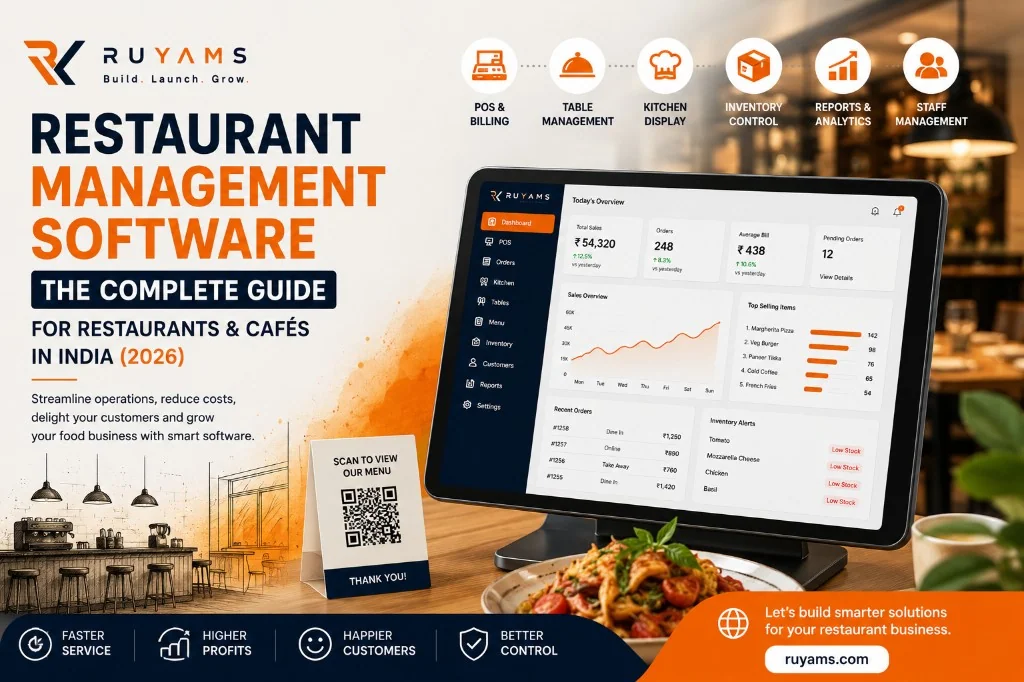
Running a restaurant today is about much more than serving great food.
Restaurant owners must manage orders, tables, kitchen operations, billing, inventory, staff, suppliers, online delivery platforms, and customer satisfaction—all while keeping costs under control.
Many restaurants still rely on handwritten order books, separate billing software, spreadsheets, or disconnected systems. As customer expectations grow and operations become more complex, these manual processes can lead to mistakes, delays, and lost revenue.
This is where Restaurant Management Software becomes an essential business tool.
Whether you own a café, fine dining restaurant, cloud kitchen, bakery, food court outlet, or a chain of restaurants, the right software can simplify operations, improve efficiency, and help you deliver a better customer experience.
In this guide, we'll explore everything you need to know about restaurant management software in 2026.
What is Restaurant Management Software?
Restaurant Management Software is an integrated platform that helps restaurants manage daily operations from a single dashboard.
Instead of using separate tools for billing, inventory, employee management, and reporting, everything works together in one system.
A modern restaurant management system can handle:
- Billing & POS
- Table reservations
- Kitchen order management
- Online orders
- Inventory tracking
- Staff attendance
- Customer database
- Sales reporting
- Supplier management
- Multi-branch operations
Its goal is to reduce manual work, improve accuracy, and provide restaurant owners with real-time insights into their business.
Why Restaurants Need Restaurant Management Software
As restaurants grow, managing operations manually becomes increasingly difficult.
Billing errors. Manual billing can result in pricing mistakes, duplicate bills, or incorrect calculations.
Food waste. Without proper inventory tracking, restaurants often purchase more ingredients than required or run out of essential items unexpectedly. See our inventory management software guide for how stock control works across food and retail businesses.
Slow service. Miscommunication between waiters and kitchen staff can delay order preparation and affect customer satisfaction.
Inventory loss. Without proper monitoring, stock shortages and pilferage often go unnoticed.
Limited business insights. Restaurant owners need accurate sales reports, peak-hour analysis, and menu performance data to make informed decisions.
Restaurant management software helps solve these challenges by connecting every part of the business.
Key Features of Restaurant Management Software
A complete restaurant management system should include the following features.
POS (Point of Sale)
A modern POS system enables fast billing, digital receipts, multiple payment methods, GST-compliant invoices, discount management, and split bills.
Quick and accurate billing improves customer experience and reduces queues.
Table Management
Restaurants can view table availability, reserve tables, merge or split tables, and track occupied and vacant tables.
This improves seating efficiency, especially during busy hours.
Kitchen Display System (KDS)
Instead of handwritten kitchen tickets, orders appear digitally on kitchen screens.
Benefits include faster communication, reduced order mistakes, better kitchen workflow, and real-time order tracking.
Inventory Management
Track ingredients such as vegetables, dairy products, meat, beverages, packaging materials, and spices.
The system automatically updates inventory after every sale and alerts staff when stock reaches reorder levels.
Online Ordering Integration
Integrate with Swiggy, Zomato, your restaurant website, and mobile app so orders from different platforms can be managed in one place. Pair this with a dedicated online ordering website to keep more direct orders and customer data in-house.
Customer Management
Store customer information such as order history, preferences, birthdays, loyalty points, and feedback.
This helps restaurants build long-term customer relationships—similar to how a CRM system organizes follow-ups for other growing businesses.
Employee Management
Manage attendance, shift scheduling, payroll integration, and performance reports. For a deeper look at workforce tools, see our guide to HRM software for small businesses in India.
Reporting & Analytics
Restaurant owners can view daily sales, peak business hours, best-selling dishes, low-performing menu items, inventory reports, and profit margins.
These insights support better business decisions.
Which Businesses Need Restaurant Management Software?
Restaurant software is suitable for:
- Restaurants
- Cafés
- Cloud kitchens
- Bakeries
- Sweet shops
- Food courts
- Fast food chains
- Pizza outlets
- Juice bars
- Ice cream parlours
- Multi-branch restaurant chains
Any business serving food can benefit from digital restaurant management.
Benefits of Restaurant Management Software
Faster billing. Reduce waiting time and improve service speed.
Better customer experience. Accurate orders and quicker service increase customer satisfaction.
Reduced food waste. Track ingredient usage and optimize purchasing.
Improved inventory control. Know exactly what ingredients are available at any time.
Higher profitability. Identify profitable menu items and reduce operational losses.
Better decision-making. Real-time reports help restaurant owners make informed business decisions.
Restaurant Management Software vs Traditional Billing Software
Traditional billing handles billing only. Restaurant management software covers complete restaurant operations.
Traditional billing has no inventory tracking. Restaurant management software provides real-time inventory.
Traditional billing offers limited reporting. Restaurant management software delivers advanced analytics.
Traditional billing relies on manual processes. Restaurant management software uses automated workflows.
Traditional billing often means separate systems. Restaurant management software is an integrated platform.
Traditional billing is difficult to scale. Restaurant management software supports multi-branch businesses.
A restaurant management system goes far beyond billing by connecting every aspect of daily operations.
Cloud-Based vs On-Premise Restaurant Software
Cloud-based
Advantages include access from anywhere, automatic backups, lower maintenance, easy updates, and multi-branch support. Ideal for most restaurants and growing chains.
On-premise
Advantages include local data storage, greater control, and suitability for businesses with specific compliance or infrastructure requirements.
How to Choose the Right Restaurant Management Software
Before investing, consider these questions:
- Is it easy for staff to use?
- Does it support GST billing?
- Can it manage inventory automatically?
- Does it integrate with online delivery platforms?
- Can it handle multiple branches?
- Does it provide detailed reports?
- Is customer support available when needed?
Selecting software that fits your operations today—and can grow with your business tomorrow—is key.
Common Mistakes Restaurants Make
Avoid these common mistakes:
- Managing inventory manually
- Using outdated billing systems
- Ignoring customer data
- No backup strategy
- Poor staff training
- No reporting or analytics
- Choosing software based only on price
A successful implementation depends on choosing the right solution and training your team effectively.
Future Trends in Restaurant Management (2026)
Restaurants are rapidly adopting new technologies, including:
- AI-powered sales forecasting
- QR-code digital menus
- Contactless ordering
- Self-service kiosks
- Mobile POS systems
- Kitchen automation
- Voice-assisted ordering
- Customer loyalty programs
- Real-time business dashboards
Restaurants that embrace technology are better positioned to improve efficiency and customer satisfaction. Strong web development practices and a complete digital presence help guests find you online before they ever walk in.
Why Choose Custom Restaurant Management Software?
Off-the-shelf solutions work well for many restaurants, but they may not fit unique workflows or specialized business models.
Custom restaurant software allows you to build features tailored to your operations, such as:
- Custom billing processes
- Multi-branch management
- Inventory linked to recipes
- Loyalty programs
- Online ordering
- Kitchen workflow automation
- Mobile applications
- Integration with accounting and ERP systems
A custom solution grows with your business instead of forcing you to adapt to generic software. Explore our restaurant CRM, staff & inventory systems for starter kits and custom builds, or browse the full restaurants & food businesses hub.
Final Thoughts
Running a successful restaurant requires more than excellent food—it requires efficient operations.
Restaurant management software helps automate daily tasks, reduce manual errors, improve inventory control, and provide the insights needed to grow profitably.
Whether you operate a neighborhood café, a cloud kitchen, or a multi-location restaurant chain, investing in the right software can improve customer service and streamline every aspect of your business.
At Ruyams, we develop custom restaurant management software designed around your unique business needs. From POS systems and kitchen management to inventory tracking, online ordering, and business analytics, we create scalable solutions that help restaurants operate smarter.
Ready to streamline billing, kitchen, and inventory for your restaurant or café? Talk to Ruyams — we build pre-built and custom restaurant CRM and operations systems alongside websites and local SEO for food businesses in Jaipur and across India.
Build. Launch. Grow.
Frequently Asked Questions
What is restaurant management software?
Is restaurant management software suitable for small cafés?
Can restaurant software integrate with Swiggy and Zomato?
What is the difference between POS software and restaurant management software?
Can restaurant management software support multiple branches?
Ready to Build Something Great?
Let's talk about your project. No commitment, no pressure — just a conversation about your goals.