
Digital Strategy
The Complete Digital Presence Checklist for Businesses (2026 Guide)
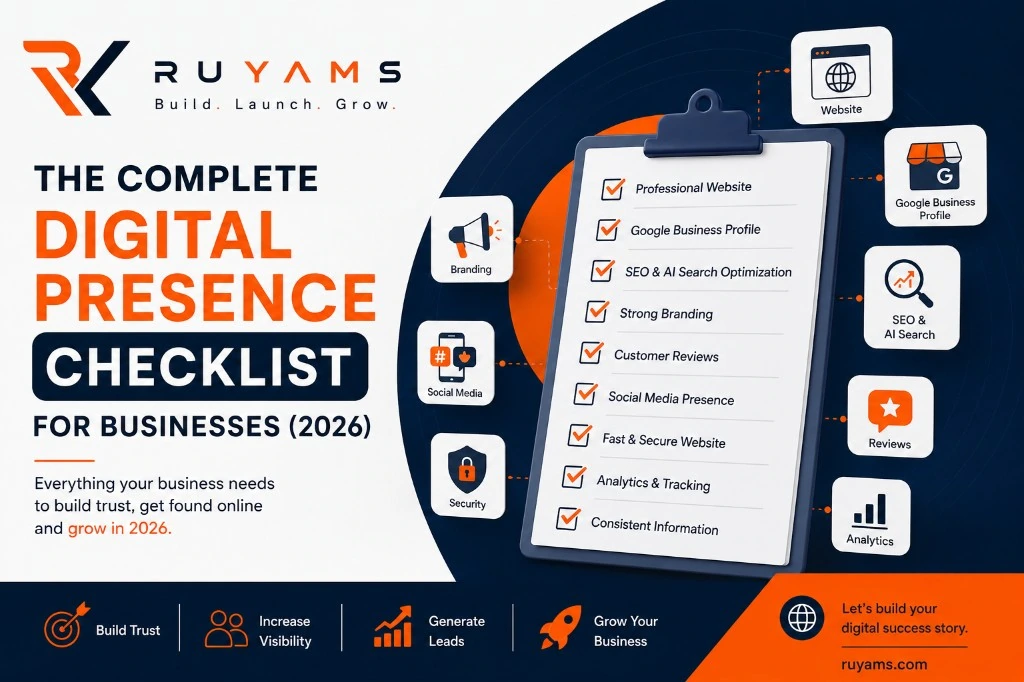
Imagine a potential customer hears about your business today. What happens next? Most people won't call immediately. Instead, they'll search for your business online.
They'll check your website, Google Business Profile, reviews, social media, portfolio, and business information. If they can't find you — or what they find doesn't inspire confidence — they'll likely move on to a competitor.
In 2026, your digital presence is often your first impression, and sometimes your only chance to earn a customer's trust. This guide walks through the essential elements every business should have to build a strong, credible, and future-ready digital presence.
What is a digital presence?
Your digital presence is the collection of everything people see about your business online. It includes:
- Website
- Google Business Profile
- Search engine visibility
- Social media
- Online reviews
- Business listings
- Content
- Branding
- Email communication
Think of it as your digital reputation. Every interaction contributes to how customers perceive your business.
Why digital presence matters
A strong digital presence helps you build trust, reach more customers, improve Google visibility, generate leads, strengthen your brand, and stay competitive. Customers expect businesses to be easy to find and easy to trust.
The complete checklist
1. Professional website
Everything begins with your website. Your website is the only digital asset you truly own. It should clearly communicate who you are, what you do, who you help, and how customers can contact you.
A modern website should also be mobile responsive, fast, secure (HTTPS), SEO-friendly, and easy to navigate.
Related reading: Web Development Best Practices (2026) · Why Every Small Business Needs a Website in 2026
2. Google Business Profile
For local businesses, Google Business Profile is essential. An optimized profile allows customers to find your business, call you, visit your website, read reviews, and get directions.
Keep your profile updated with photos, services, business hours, and contact information.
Related reading: Google Business Profile Optimization Guide (2026)
3. Strong branding
Your brand is more than a logo. Customers should instantly recognize your business through colors, typography, messaging, tone, and visual consistency. Consistent branding builds familiarity and trust.
4. Search Engine Optimization (SEO)
A beautiful website won't help if nobody can find it. SEO improves your visibility when customers search for your services.
Focus on helpful content, technical SEO, internal linking, quality backlinks, and fast performance. SEO is a long-term investment that continues to generate traffic over time.
5. AI Search Optimization (AEO)
Search is evolving. People now ask AI assistants questions like: "Recommend a website development company."
Businesses need to prepare for AI-powered search by creating expert content, structuring information clearly, building authority, and maintaining technical excellence.
Related reading: AI Search Optimization (AEO) Guide
6. Mobile-friendly experience
Most visitors will access your website from a smartphone. A poor mobile experience often leads to lost customers.
Make sure your website loads quickly, uses readable fonts, has touch-friendly buttons, and displays correctly on every screen. If you're unsure whether to start with a website or an app, read our guide on website vs mobile app for small businesses.
7. Fast website performance
Website speed directly impacts user experience, SEO, and conversion rates. Slow websites increase bounce rates and reduce trust.
Regularly optimize images, caching, JavaScript, CSS, and hosting — or work with a partner who builds for performance from day one.
8. Professional email address
Compare company@gmail.com with hello@yourbusiness.com. A professional email immediately improves credibility and shows customers you take your business seriously.
9. Customer reviews
Reviews influence purchasing decisions. Encourage satisfied customers to leave honest reviews, and respond professionally to both positive and negative feedback. Active engagement shows customers you care.
10. Social media presence
You don't need to be everywhere. Focus on platforms where your audience spends time. For many businesses, LinkedIn, Instagram, and Facebook are enough.
Share project updates, educational content, customer success stories, and behind-the-scenes content.
11. Helpful blog content
Publishing educational content positions your business as an expert. Good blog topics answer customer questions before they ask.
Benefits include better SEO, more website traffic, AI visibility, and customer trust. Consistency matters more than frequency.
12. Security and backups
Protect your business with SSL certificates, strong passwords, two-factor authentication, regular backups, and security updates. Trust starts with a secure website.
13. Analytics and performance tracking
You can't improve what you don't measure. Track website visitors, traffic sources, popular pages, conversions, and user behavior — then use those insights to improve your marketing strategy.
14. Clear contact information
Customers should never struggle to contact you. Include a phone number, email, WhatsApp (if applicable), contact form, and business address. The easier it is to reach you, the more enquiries you'll receive.
15. Consistent business information
Your business name, address, phone number, and website should remain consistent across your website, Google Business Profile, social media, and business directories. Consistency improves trust and supports local SEO.
Common mistakes businesses make
Many businesses lose potential customers because they don't have a website, ignore Google Business Profile, use outdated branding, never publish content, have slow websites, ignore SEO, don't monitor analytics, or share inconsistent business information.
Avoiding these issues can significantly strengthen your online presence.
Your digital presence checklist
Use this checklist to evaluate your business:
- Professional website
- Mobile-friendly design
- Google Business Profile
- SEO
- AI Search Optimization
- Consistent branding
- Professional email
- Customer reviews
- Active social media
- Helpful blog
- Fast website
- Secure website
- Analytics
- Contact information
- Regular updates
If you checked every item, you're building a strong foundation for long-term online growth.
Final thoughts
Your digital presence isn't built overnight. It's the result of consistent effort across multiple channels that work together.
A website attracts visitors. SEO helps people find you. Google Business Profile improves local visibility. Content builds trust. Branding creates recognition. AI Search Optimization prepares your business for the future.
Rather than treating these as separate tasks, think of them as parts of one connected digital strategy. Businesses that invest in a complete digital presence today will be better positioned to earn trust, generate leads, and grow in the years ahead.
At Ruyams, we help startups, local businesses, and growing companies build digital experiences that are modern, scalable, and focused on long-term success — from website development and digital marketing to branding and strategy. Read our complete digital services guide or book a free consultation.
Build. Launch. Grow.
Frequently Asked Questions
What is a digital presence?
Why is a website important for digital presence?
Can social media replace a website?
How often should I update my digital presence?
What should a small business prioritize first?
Ready to Build Something Great?
Let's talk about your project. No commitment, no pressure — just a conversation about your goals.